Spiritual Psychologist, Multidisciplinary artist, Speaker

ceramics


Ceramics
What happens when you blur art and science?


Ceramic Tarot

Even though artists run in the family, I never believed I got that gene. But I found ceramics in my late 30s, in grad school, almost by accident.

In my first spring semester at Columbia's Teachers College earning my Masters in Psychology in Education from the Spirituality Mind Body Institute, my friend was so enthusiastic about her Intro to Ceramics class. Every week in Archetypal Symbolism, she’d tell us about her joy playing with clay.

I'd spent my whole life around performance, but I'd never made objects. Things with weight. Things that stay. Naturally, I had to infuse my intersests.

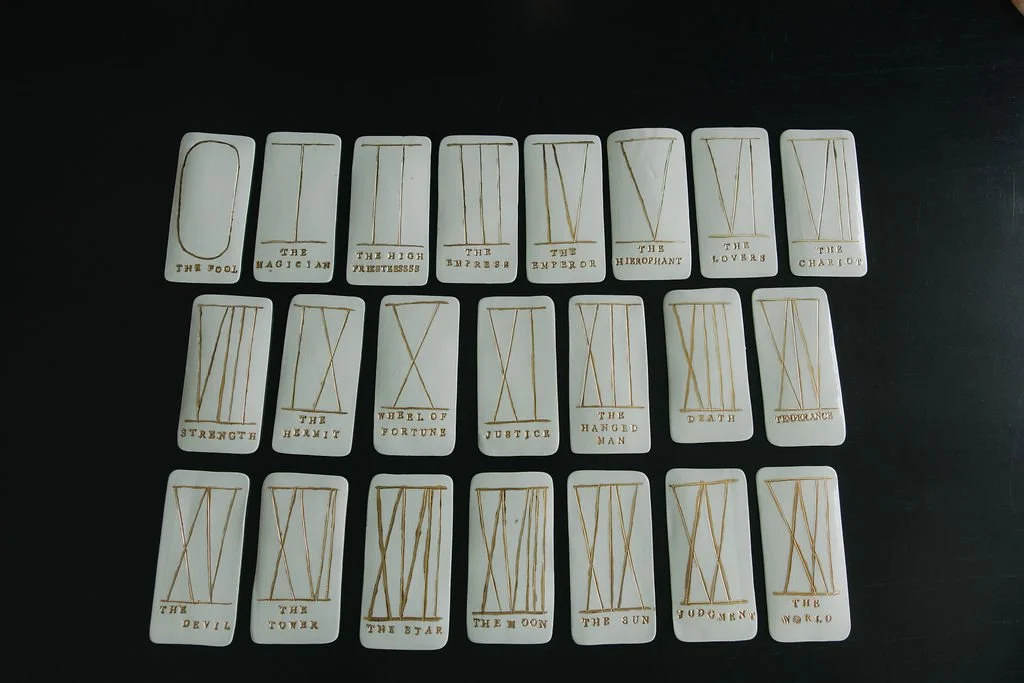
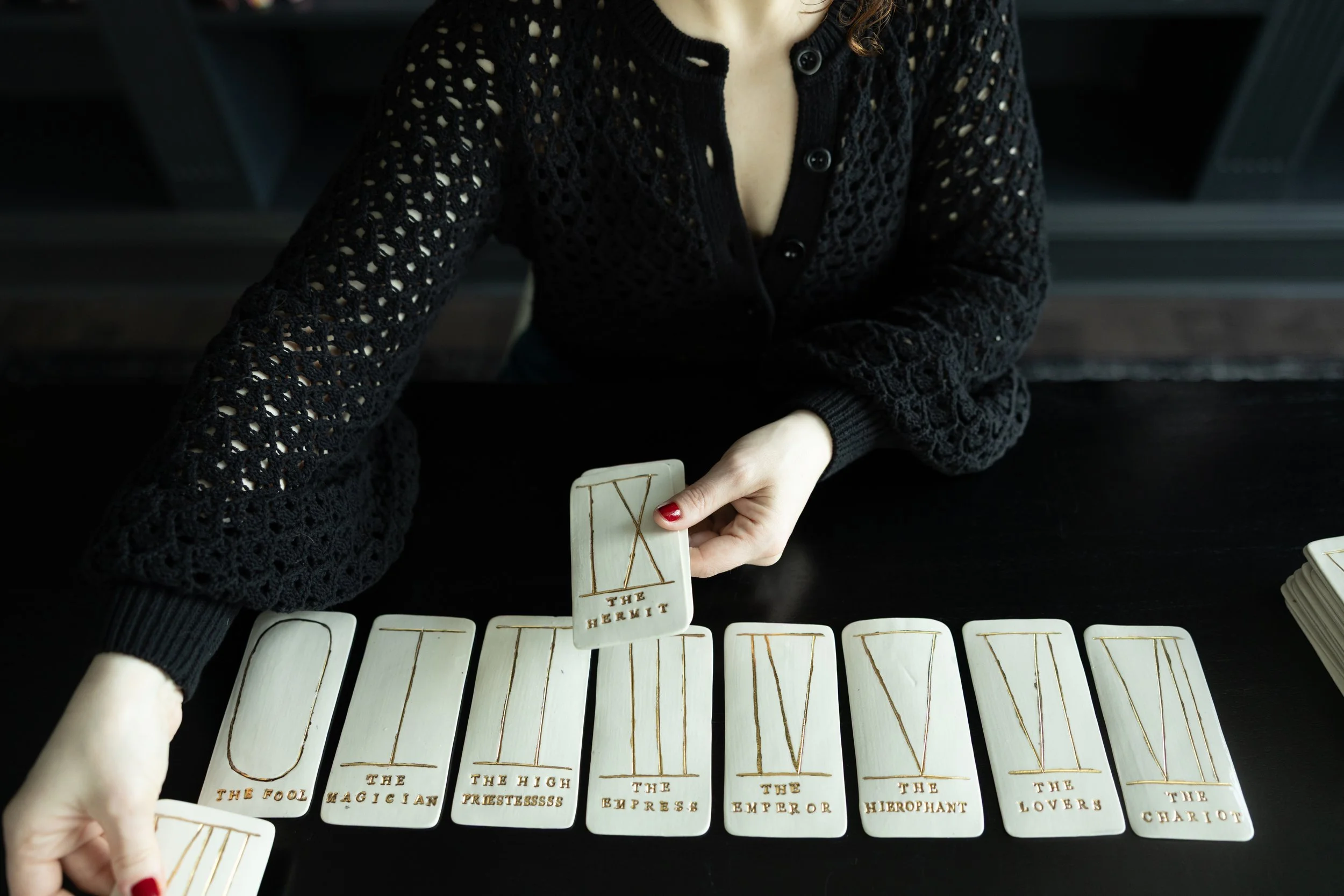
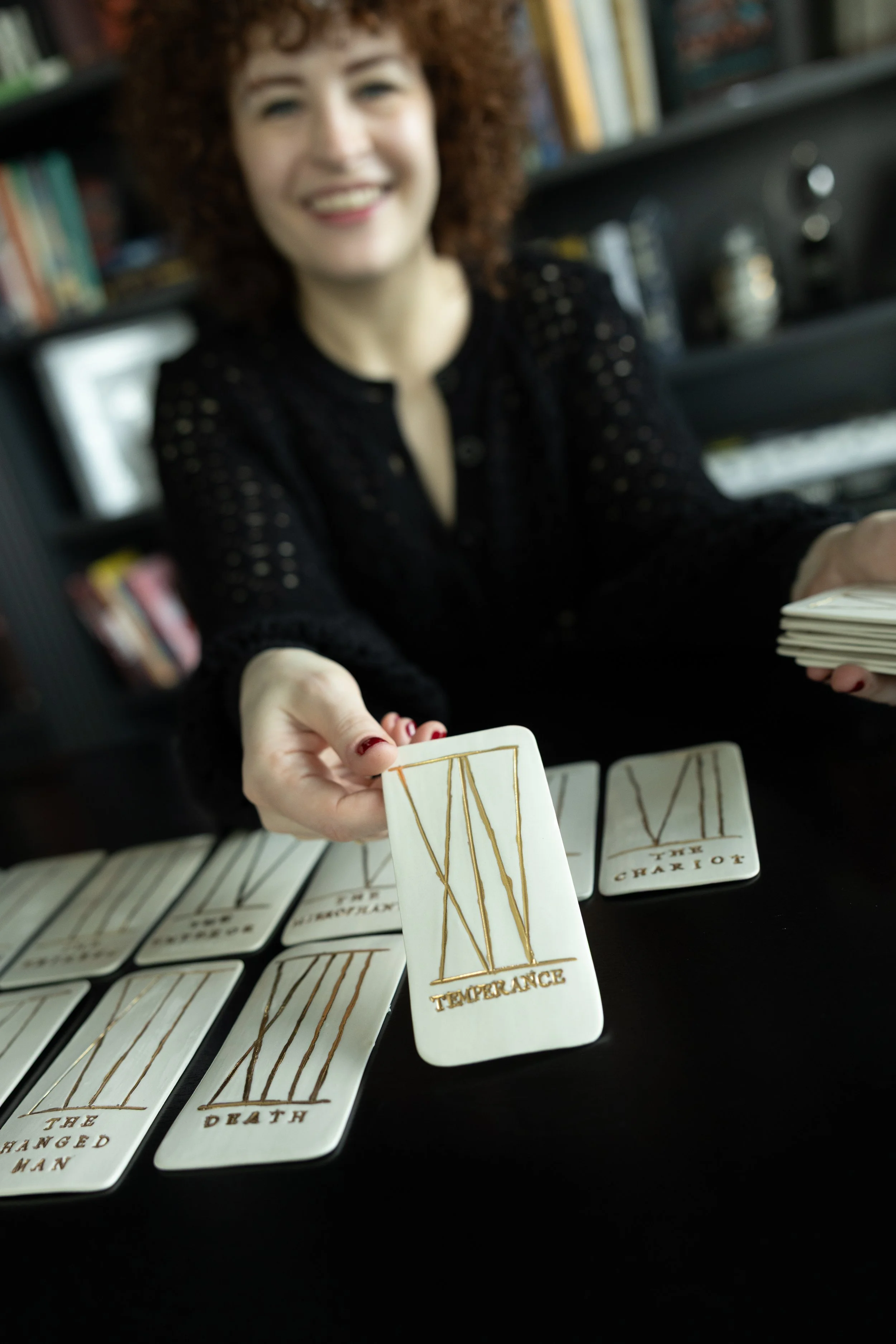
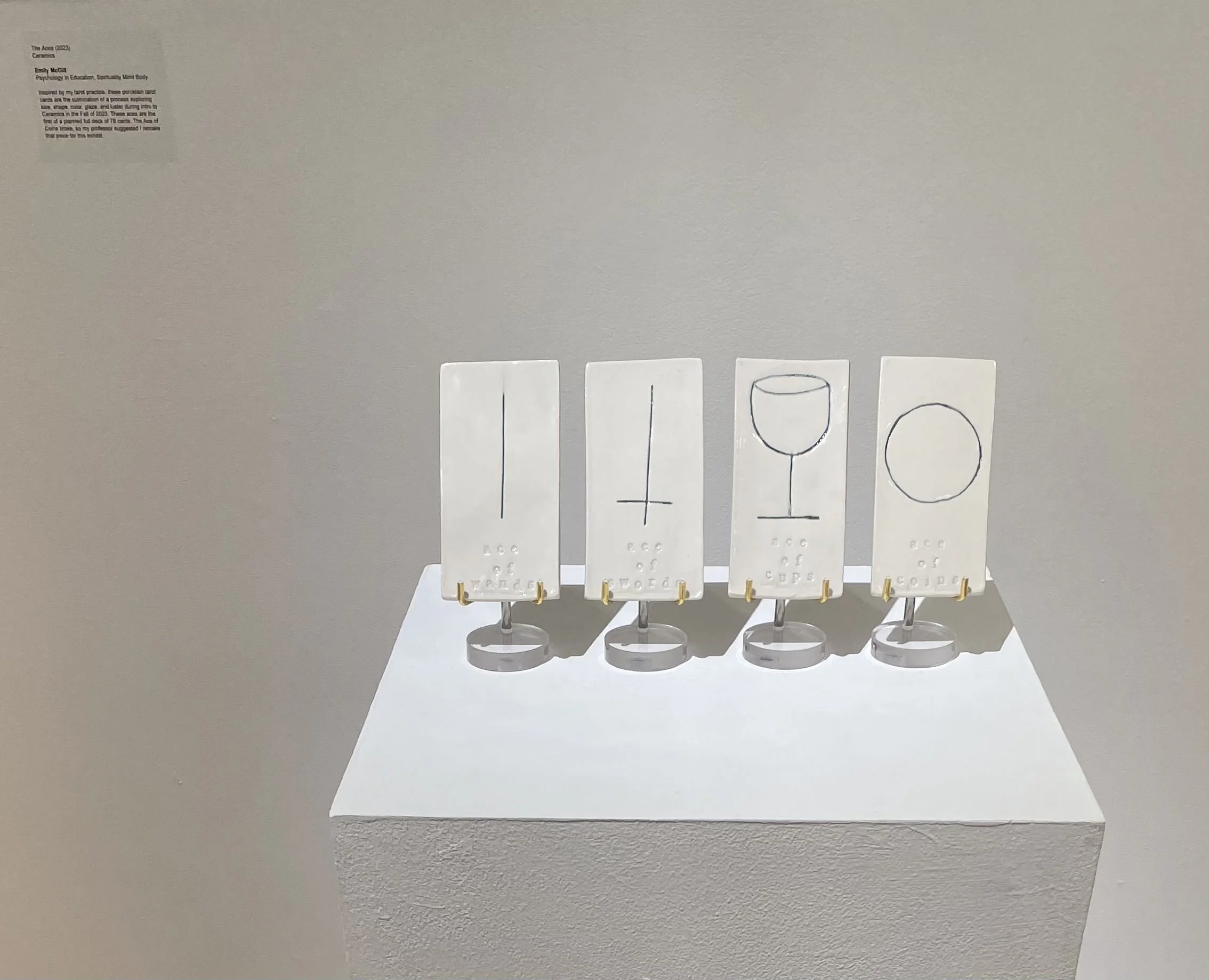
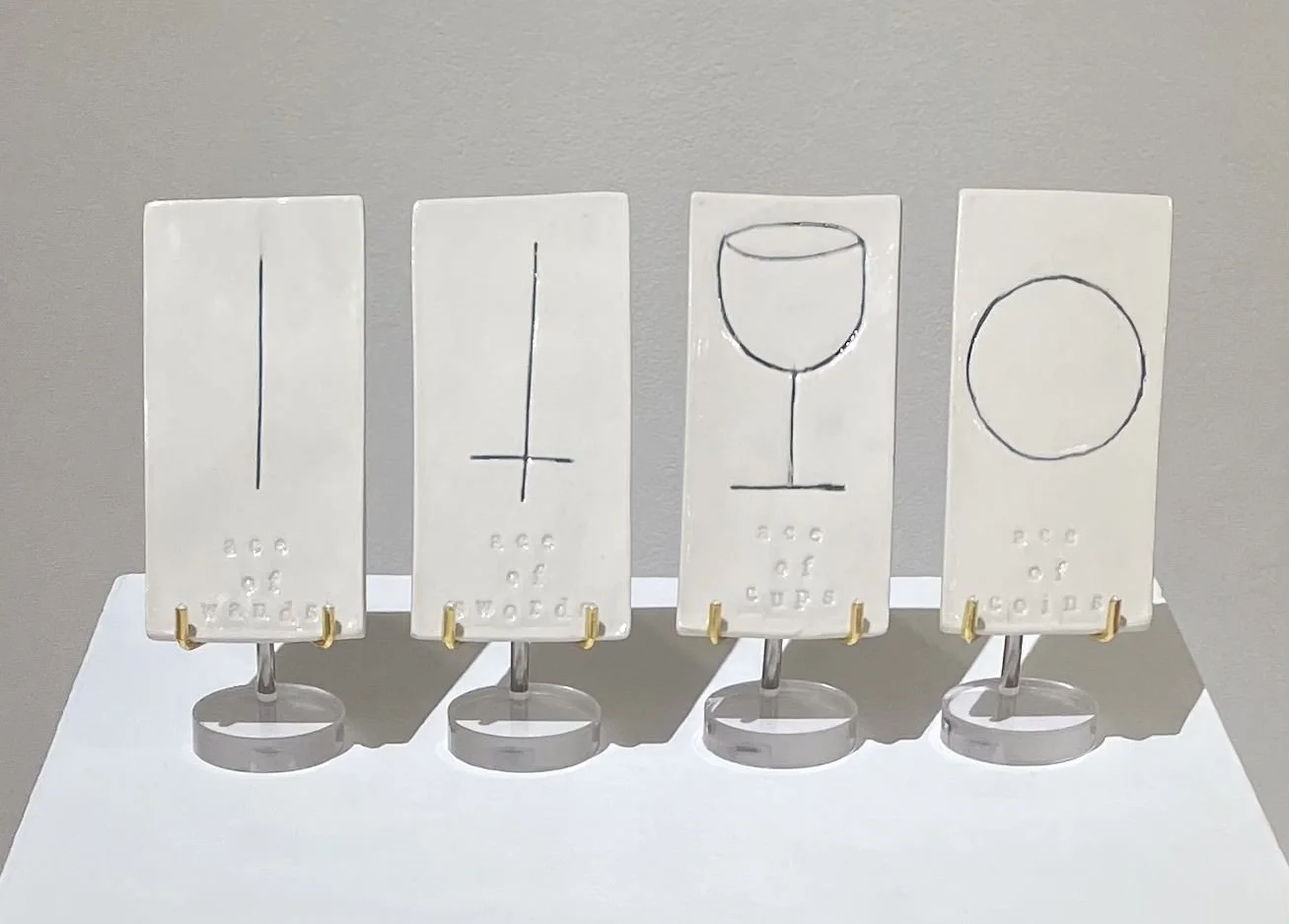
The first thing I began to experiment with was a set of four Aces: hand-cut porcelain tarot cards with stamped card names and carved suit symbols. After a few rounds of test cards, I landed on a style and started practicing the process.

One set of The Aces (2023) showed in a gallery on campus, and something clicked. I'd already created a tarot deck that was about to be published on paper (The Hirschfeld Broadway Tarot, Hachette Book Group, 2024), but now I wanted to know what happens when the esoteric becomes permanent sculpture.

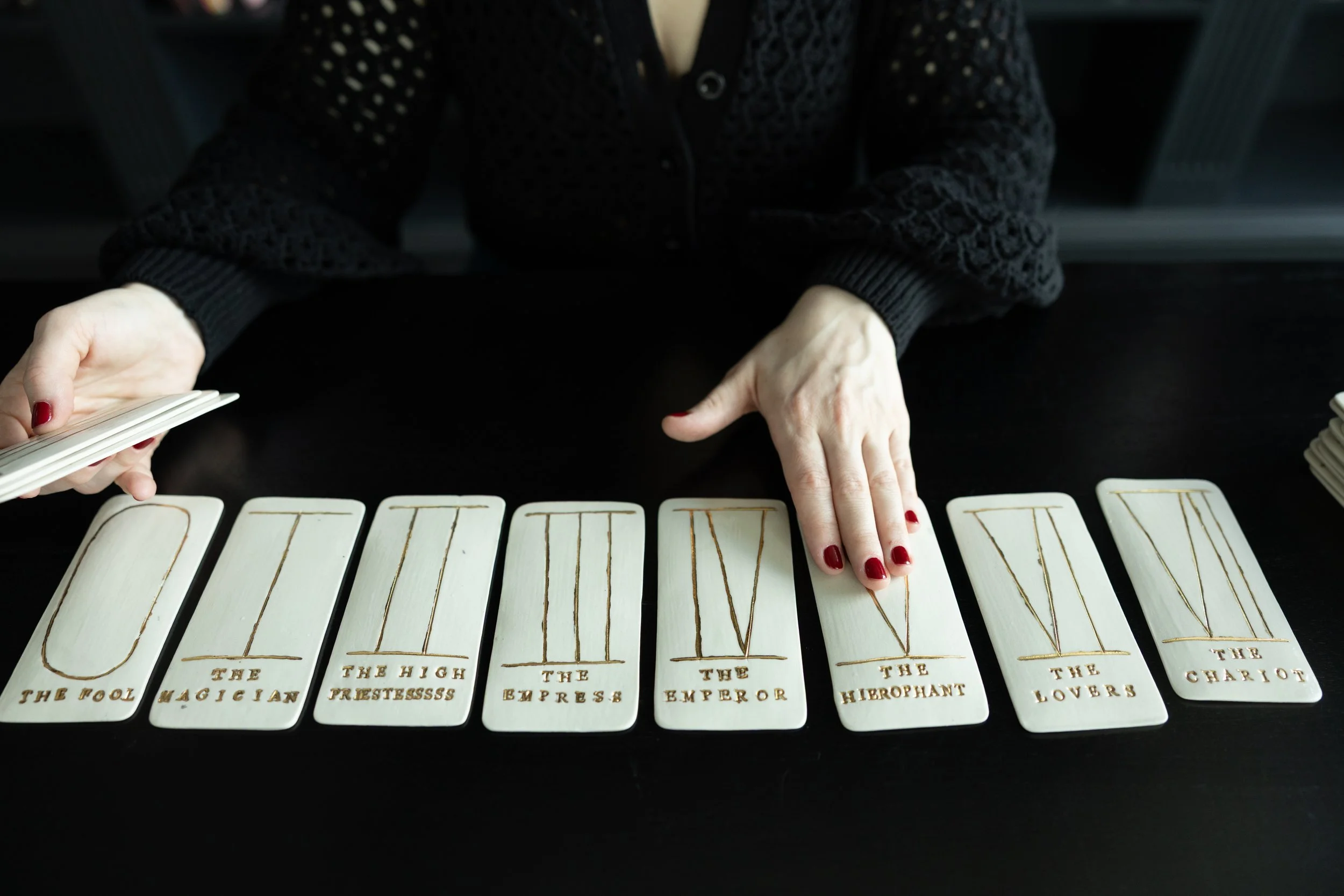
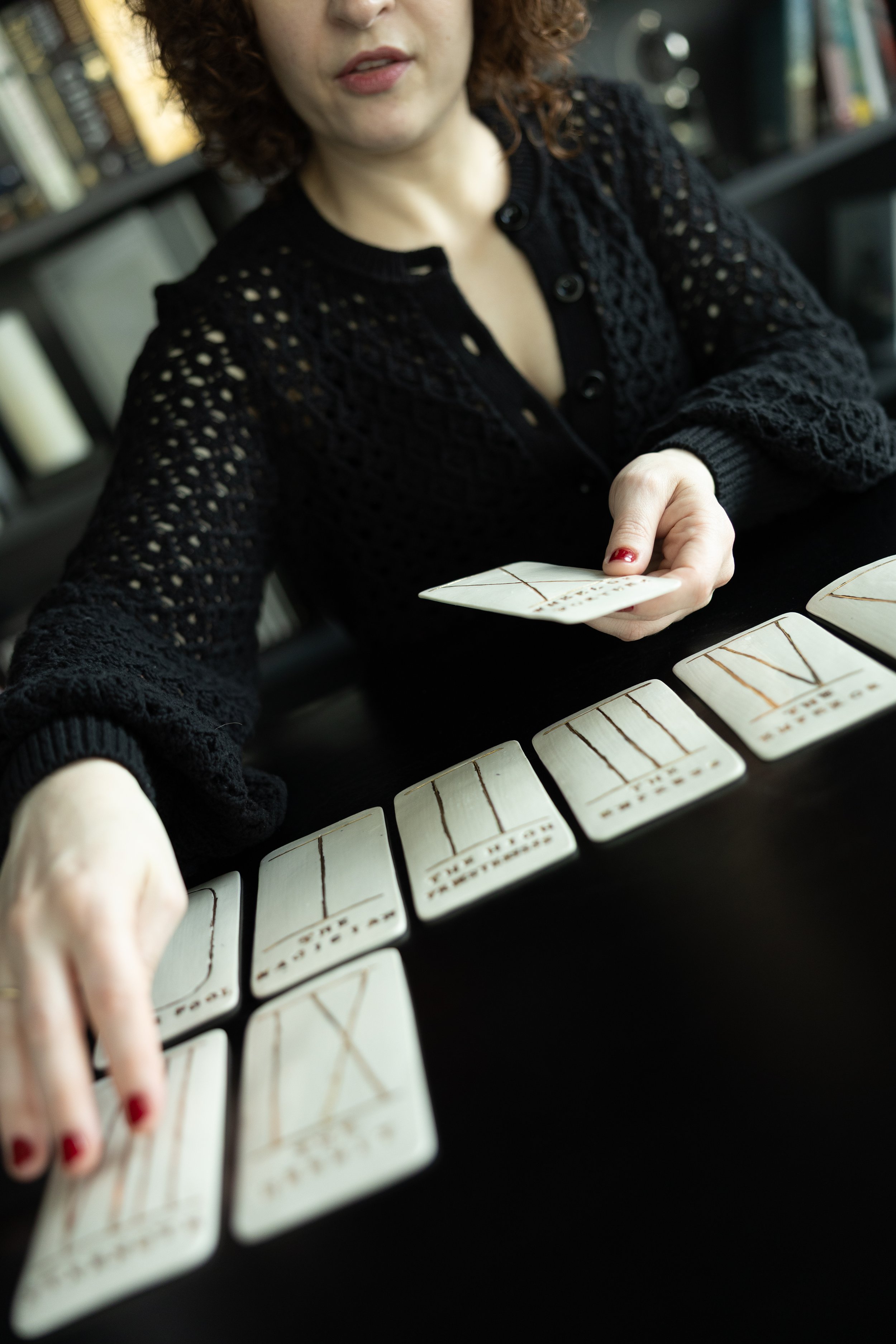
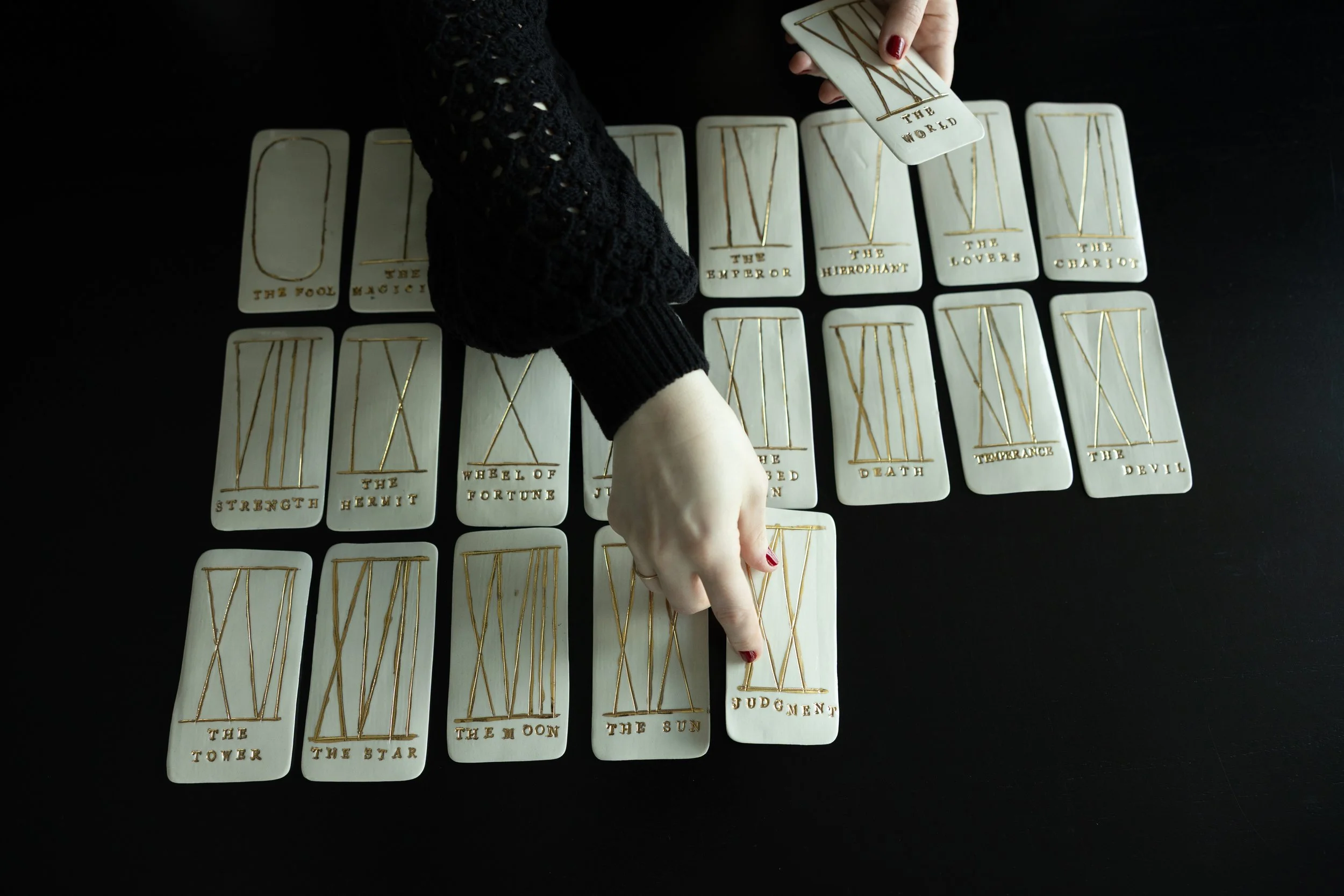
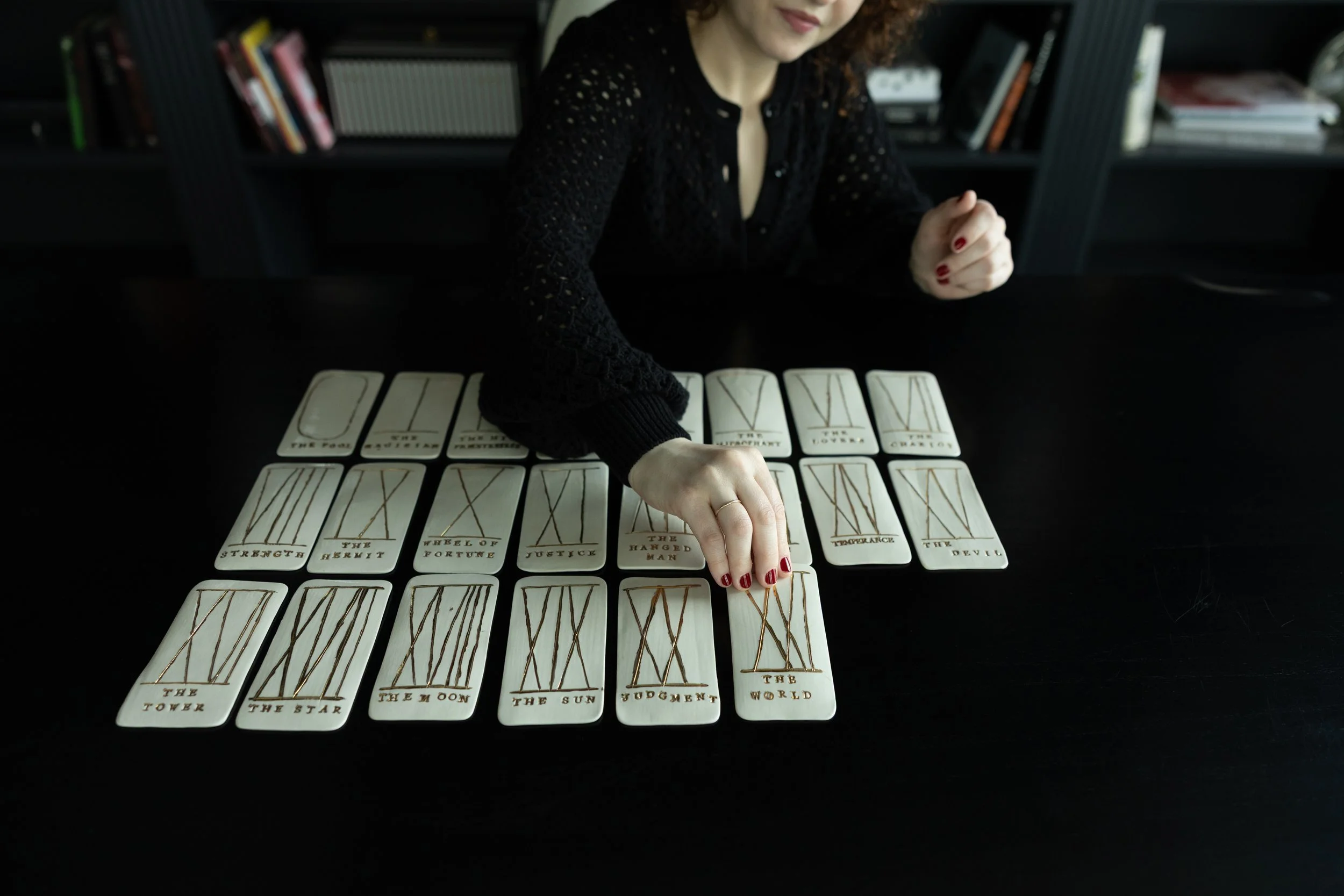
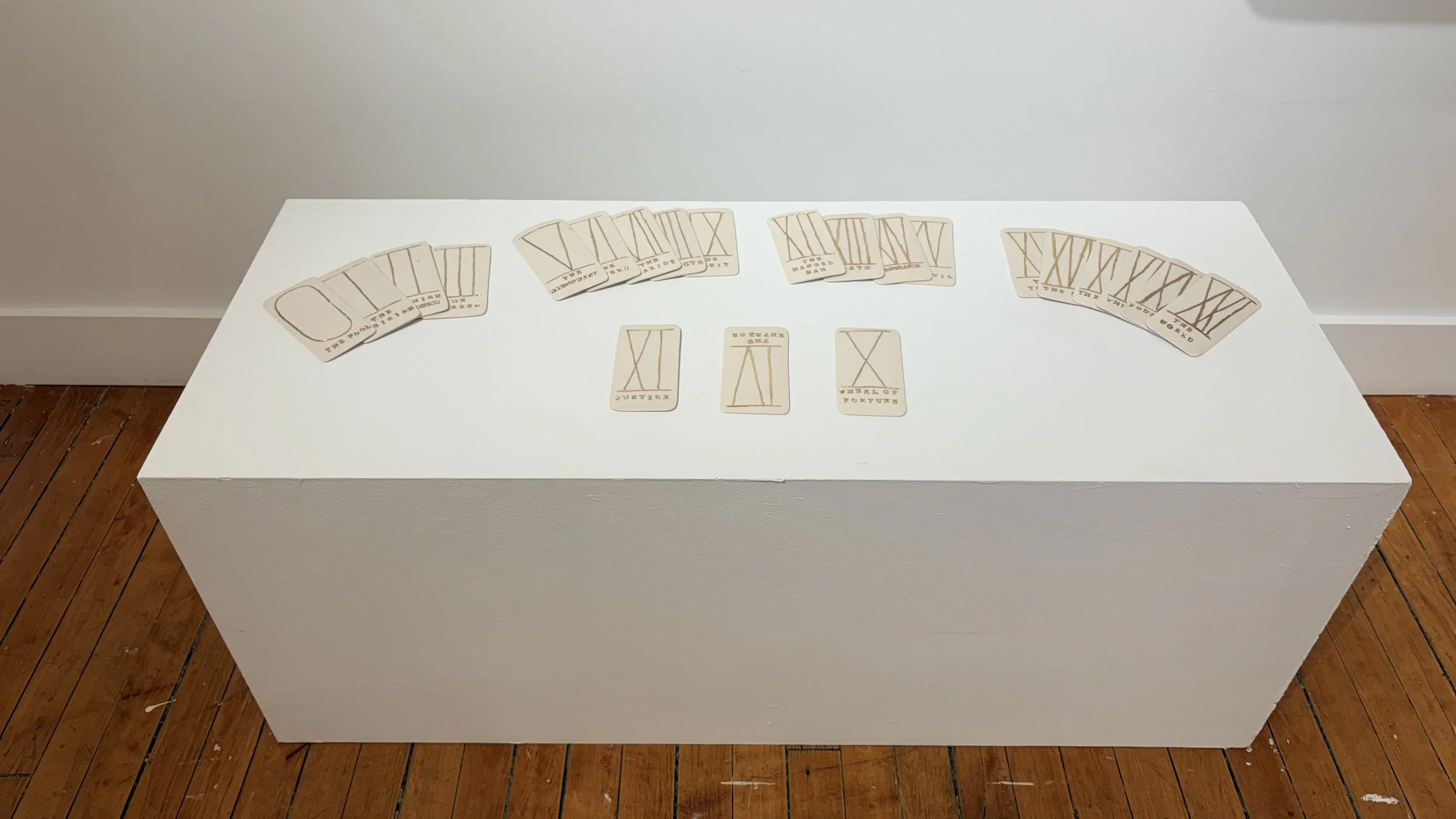
Slowly, the practice has expanded over the years. Those first aces led to several full Major Arcanas, and now finally full, 78-card tarot decks in porcelain. Each card gets rolled, cut, stamped with its name, carved with its Roman numeral or suit, fired, glazed, and finished with gold luster. It's slow. It's repetitive. It’s easy to slip into flow. It's an excellent meditation for a neurodivergent brain like mine; I've had to systematize everything, the system becoming a ritual.

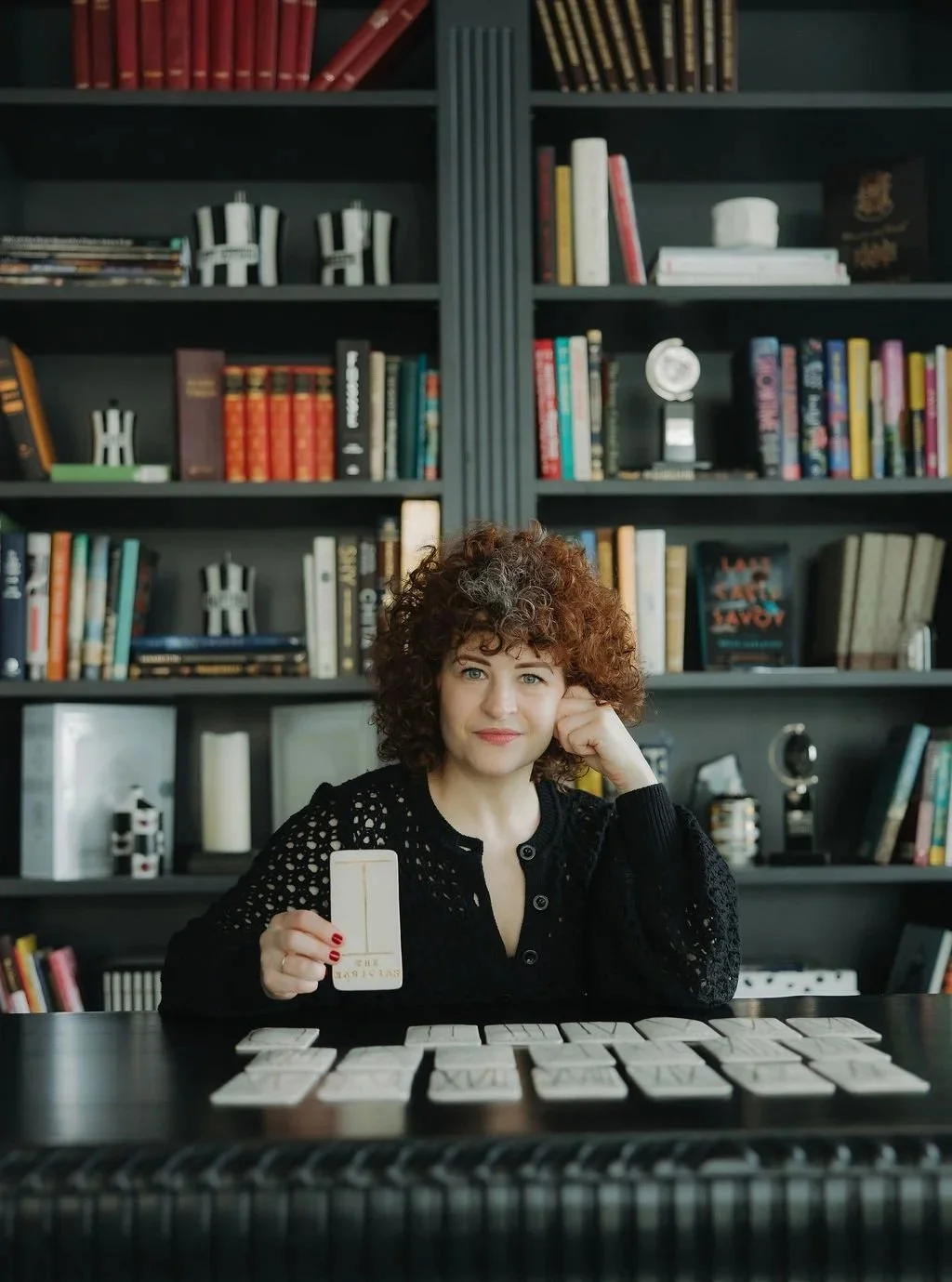
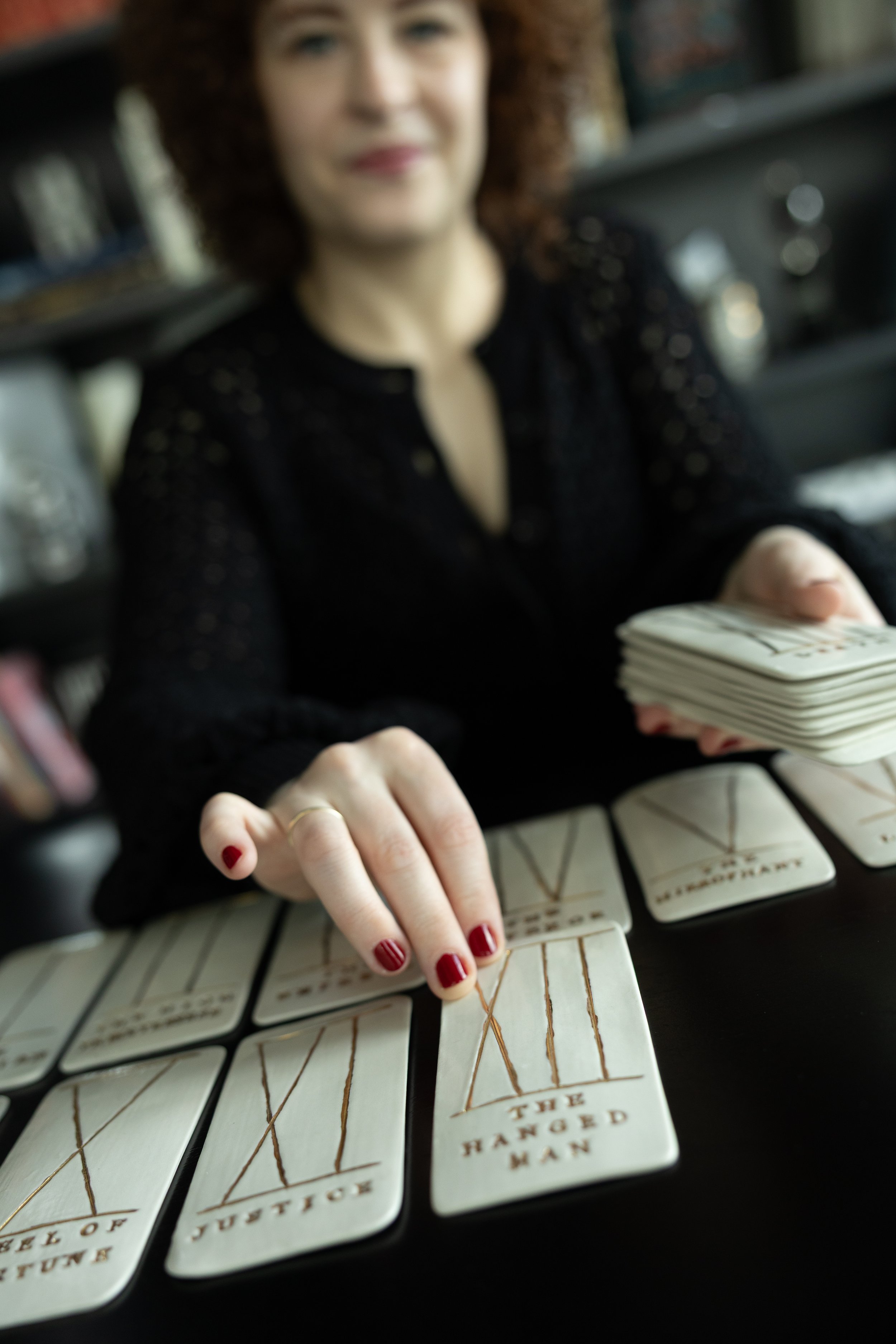
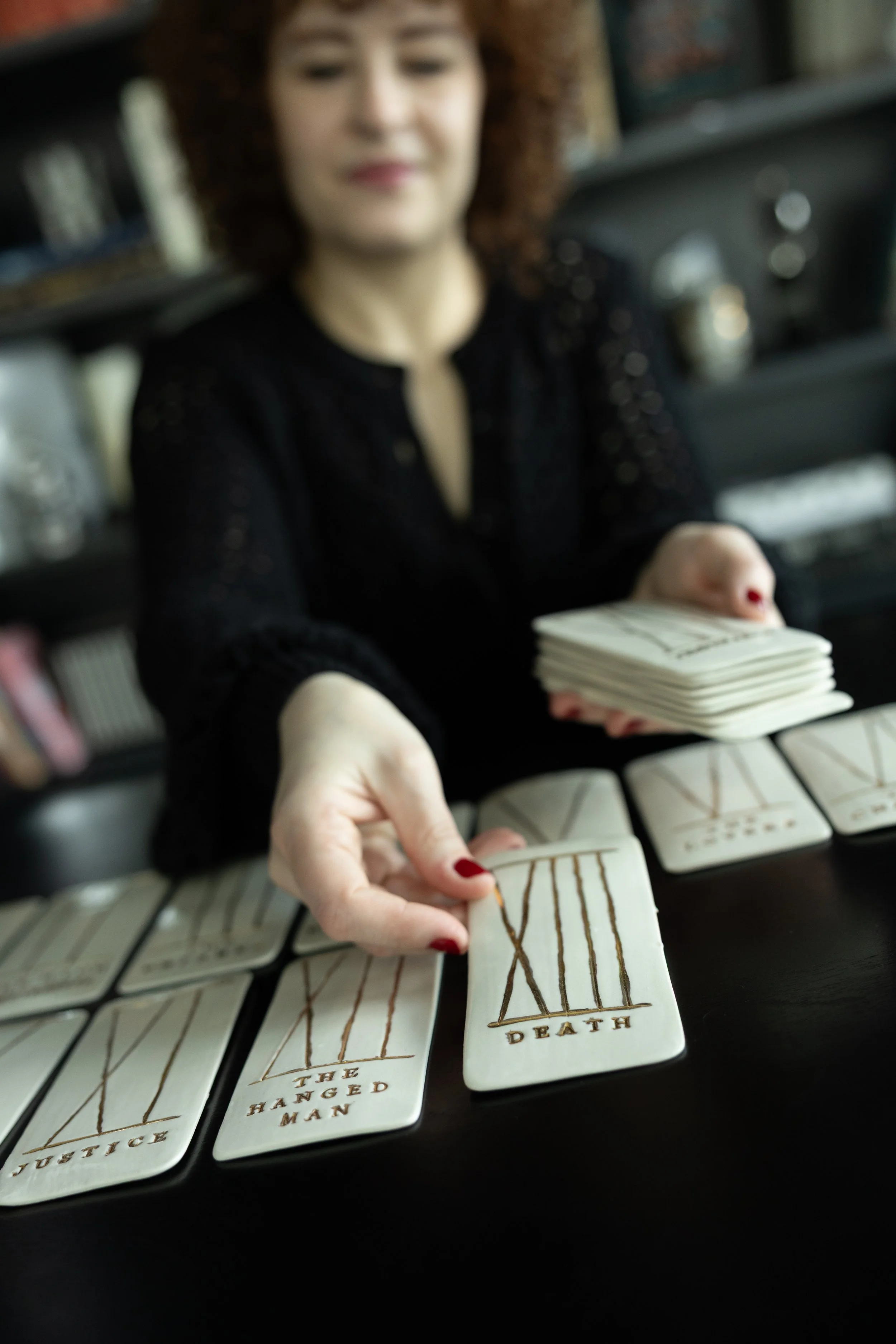
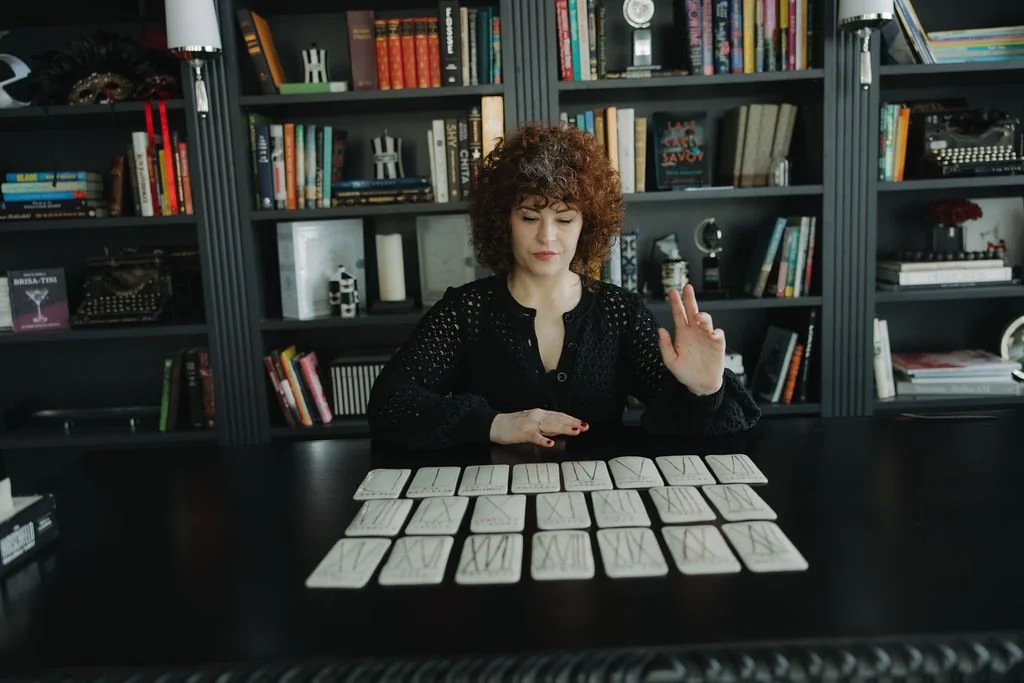
Here's what I love most: these cards aren't just for display. I can read with them!

A porcelain tarot card holds literal weight, you can't shuffle it or flip it carelessly. Every placement is deliberate. A reading with ceramic cards is slower, more intentional, more felt than anything paper can do. That collapse between art object and spiritual tool is the whole point.

The work has shown twice at the Macy Art Gallery at Teachers College, and I'm currently building toward multiple complete decks, new forms, and installations that pair the framed deck with those live readings — the cards pulled, placed, and discussed, left on the table like evidence.


Email for more info